
Pattern Making, Measuring and Pressing
This category brings together our guides to the stages before and during sewing: taking body measurements, drafting a pattern with the right rulers, and pressing on pressing cushions throughout the work. The guides are written for dressmakers, pattern makers and fashion design students.
The first step is the guide How to Take Body Measurements for Sewing. It is followed by the pattern-making rulers guide, which explains which ruler draws which line, and the pressing cushions guide, which matches a cushion to each part of the garment: sleeve, shoulder, collar and button placket.
The equipment is in the Rulers, Pressing Cushions and Ironing Boards categories. The catalog includes metal set squares, curve rulers, clear cutting rulers, seven pressing cushions in different shapes and three folding ironing boards. Fashion schools and studios can get a volume-based price quote. The three areas are connected: accurate measurements give a correct pattern, and proper pressing at every stage keeps the shape the pattern created, until the garment is ready for fitting on a dress form.
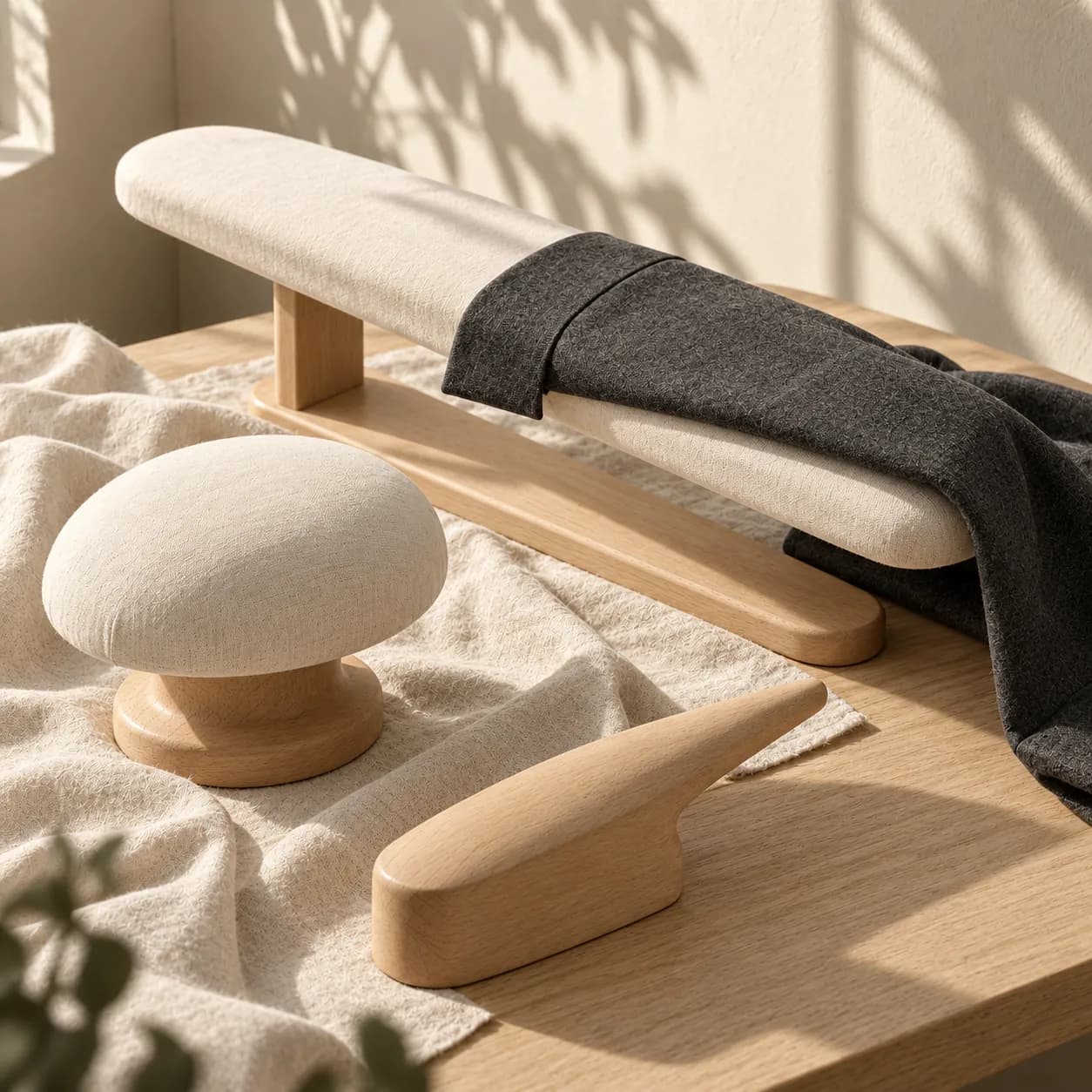
Pressing Ham for Sewing: Which Pressing Tool for Sleeves, Shoulders, Collars and Buttons
A practical guide to choosing a pressing tool by garment area: sleeves, sleeve caps, shoulders, collar points and button plackets, with the right working order and recommended kits for home and studio.

Pattern Making Rulers: Square, Curve and Cutting – What Each Ruler Draws
Which pattern making ruler draws which line: L-square, curve rulers, pattern master and clear cutting ruler. Work order, seam allowance, safe rotary cutting and what to buy first.

How to Take Body Measurements for Sewing: Bust, Waist, Hips and Lengths
A measuring guide for sewing: how to measure bust, waist and hips, back, sleeve and inseam lengths, what's different when measuring men and children, and how to use your measurements to choose a dress form.
Frequently asked questions
Why do you need a pressing ham if you have an ironing board?
An ironing board suits large, flat pieces of fabric. A pressing ham suits parts that have been sewn into a rounded or closed shape, such as a sleeve cap, shoulder, whole sleeve and collar point, which get creases on a flat board.
Which ruler should you buy first for pattern drafting?
Most of the work starts with straight and perpendicular lines, so an L-square is a good base. For the curves of the waist, hip and armhole, add a curve ruler. The rulers guide details what each ruler draws.
What lengths of ironing boards are in the catalogue?
The catalogue has folding ironing boards 90, 110 and 120 cm long, with a grey cotton cover and an iron rest. The small board suits a sewing corner, and the larger ones suit the home and the studio.
Which body measurements do you take before sewing?
The basic measurements are bust, waist and hip circumference, along with lengths such as back length and sleeve length. The guide to taking measurements explains where to measure each one and how to avoid mistakes.