
Glues
Fabric glues for sewing and repairs, for dressmakers, designers, stylists and shops: Gütermann HT2 textile glue and iron-on fusing powder, flexible E6000 and Shoe Goo adhesives, instant shoe glue and super glue, three spray adhesives (permanent, temporary and web), a hot glue gun, double-sided body and clothing tape, and matte tesa tape. For each glue we list what it bonds, how long it takes to dry and whether it is washable. Retail and wholesale, with delivery nationwide.
Products: 14




Fabric glue: when it helps sewing and when it replaces it
In a professional studio, glue doesn't take the place of the sewing machine – it supports it. A temporary spray holds fabric or pattern paper in place so nothing shifts while cutting and marking. Textile glue or fusing powder fixes an unravelled hem without a machine, and flexible glue holds rhinestones and embellishments that can't be sewn on. The right choice depends on the material, on washing and on how long the bond needs to last. Our glues are part of the sewing supplies category, alongside sewing accessories.
Types of glue in this category
Fabric glues
Gütermann HT2 textile glue: a 30 g tube. It sets quickly, stays flexible once dry and withstands washing up to 40°C. Suitable for repairing an unravelled hem, for appliqués, patches and labels, and for bonding fabric to leather, faux leather and PVC. Spread a thin layer on one side, wait about 5 minutes, press together and leave to dry for at least 30 minutes.
Iron-on fusing powder: a jar with a perforated shaker lid. Sprinkle a little powder between two layers of fabric, cover with baking paper and iron; the powder melts and bonds them together. For mending tears, attaching patches and fixing a hem without sewing. Washable up to 40°C; not suitable for nylon or for fabrics that can't take the heat of an iron.
Flexible glues
E6000: a clear industrial adhesive made in the USA, in a small 5.3 ml tube or a 109.4 ml self-leveling tube. It dries clear and stays flexible, and once fully cured it is resistant to water and to machine washing and drying. It bonds stones, rhinestones and sequins to clothing, shoes and accessories, as well as leather, metal, glass and wood. Not suitable for polyethylene, polypropylene, polystyrene or Styrofoam.
Shoe Goo: 59.1 ml, clear. A thick, elastic adhesive that both bonds and fills, for leather, rubber, vinyl and canvas: rebuilding a worn sole edge, sealing a seam on a shoe and coating a friction area.
Instant glues
Instant shoe glue: 20 g, clear, with a narrow precision nozzle, for leather, rubber, heels, soles and shoelace tips. Ideal for small spot repairs that need to hold fast.
Super glue: a bottle with a pointed nozzle, for metal, leather, rubber and suitable plastics. The glue hardens on contact with the moisture on the surface, so a thin layer cures quickly while a thick layer turns out weaker.
Spray adhesives
Temporary repositionable spray: 500 ml. A gentle tack that lets you lift and reposition: holding fabric on the cutting table, fixing pattern paper and stencils for marking, screen printing, and basting layers in patchwork and quilting before sewing. Spray from about 30 cm onto the wrong side of the fabric. Not intended for bonding a finished product.
Permanent spray adhesive: 500 ml, a fine mist that dries clear, for fabric, foam, leather, wood, cardboard and plastic. Spray both surfaces from 15 to 20 cm and wait about a minute before pressing together.
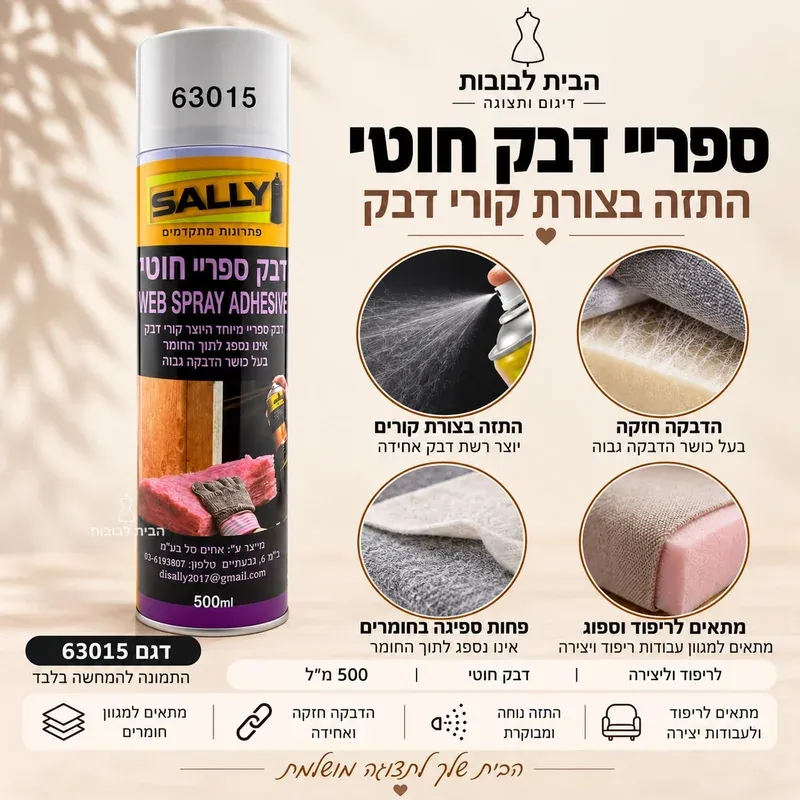
Web spray adhesive: 500 ml. The glue comes out in fine strands and stays on the surface of the material instead of soaking in, which makes it suitable for foam, fabric, felt and upholstery. Spray both surfaces from about 30 cm, wait about 20 seconds and press together.
Hot glue gun and adhesive tapes
40W hot glue gun: for 11 to 12 mm glue sticks (not included), with a trigger, a precision nozzle with a silicone cover and double insulation. Suitable for sets, displays and craft projects that need a quick bond.
Double-sided body and clothing tape: clear tape in a dispenser with a cutter, for sticking fabric to skin and fabric to fabric: securing a neckline, a strapless dress or a strap, and holding a garment in place on a display mannequin during a photo shoot or window dressing.
tesa film Invisible: matte tape, 33 m long and 19 mm wide, that you can write on and that doesn't show up when copying documents. In the studio it is used to join paper pattern pieces and to write the size number on the tape.
How to choose a glue
Fabric to fabric: HT2 for a quick repair without an iron, or fusing powder when you have an iron and baking paper.
Stones and rigid embellishments on fabric: E6000, which stays flexible and withstands washing once fully cured.
Shoes: Shoe Goo for worn soles and sealing, instant glue for a quick spot repair.
Foam and upholstery: web spray, or permanent spray for large areas.
Holding in place before cutting or sewing: temporary spray, which releases the fabric when the work is done.
Flexibility: for clothing and shoes that bend, choose a glue that stays flexible. Instant glue forms a thin, rigid layer.
How to glue properly
Test first: glue a scrap of fabric from the same roll, or a hidden area of the garment, and check that the glue doesn't stain, bleed through or stiffen.
A thin layer: more glue doesn't hold better. It seeps through to the visible side of the fabric and lengthens the drying time.
Wait before use: a thin layer of E6000 dries within 24 hours, while a thick layer needs 48 to 72 hours to reach full strength.
Protect the iron and the fabric: when heat-bonding, cover with baking paper, press rather than glide the iron, and let the fabric cool before lifting the paper. Iron curved areas on an ironing ham.
Work in a ventilated space: E6000 contains solvents, and sprays should never be used near an open flame or heat.
When not to use glue instead of sewing
On seams that bear weight or tension, such as side, crotch and shoulder seams.
On very stretchy fabrics such as Lycra, where a glued bond may come apart with movement.
On garments washed at a higher temperature than the glue is rated for. HT2 and fusing powder are suitable for washing up to 40°C.
Glues in the studio, in costume work and in the shop
Designers and dressmakers: holding fabric and pattern paper before cutting, and gluing stones onto evening and bridal gowns. After finishing, it's a good idea to store the gown in a dress cover.
Working on a form: position the embellishments on a dress form, and only then glue them with the garment laid out flat.
Shops and photographers: double-sided tape and a hot glue gun are used to hold garments in place and to build displays. Display ideas can be found in our guide to shop window design.
Related guide: Glue for fabric, leather and shoes: which glue suits which job
Wholesale glues
HaBayit LaBubot sells glues wholesale to studios, sewing schools, costume departments and shops. For a quote based on quantity, call 03-9444226, message us on WhatsApp at 055-2473993 or get in touch via the contact page. You can order online and pick up from Kfar Giladi 15 or HaMashbir 17 in Tel Aviv, or have it delivered according to the terms on the shipping and returns page.
Frequently asked questions
Which fabric glue is washable?
Gütermann HT2 textile glue and iron-on fusing powder are washable up to 40°C. E6000 withstands machine washing and drying once fully cured, which takes 24 hours in a thin layer. Never wash at a higher temperature than the glue is rated for.
What is the difference between temporary spray adhesive and permanent spray adhesive?
Temporary spray gives a light hold that lets you lift and reposition the fabric, and is used for the preparation stages: securing fabric to the cutting table, attaching pattern paper, and holding quilting layers before sewing. Permanent spray creates a bond that doesn't come apart, for gluing fabric, foam or leather to a base. Temporary spray isn't meant for bonding a finished product.
Can I hem without sewing?
Yes. You can spread a thin layer of HT2 textile glue, wait about 5 minutes and press together, or sprinkle fusing powder inside the fold, cover with baking paper and iron. Both methods hold up in the wash up to 40°C. Fusing powder is not suitable for nylon or for fabrics that can't withstand ironing heat.
How do you glue rhinestones and sequins onto an evening gown?
Use a flexible glue such as E6000, whose small tube is handy for precise dots of glue. First mark where the embellishments go, test on a scrap from the same roll, and glue with the gown spread out flat. Leave it flat for at least 24 hours before hanging or wearing it.
How do you stop glue from seeping through to the right side of the fabric?
Apply a thin layer and don't add more glue to make it stronger. Put baking paper under the fabric so it doesn't stick to the table, and always test first on a scrap from the same roll. For questions about the right glue for a particular fabric, reach us via Contact Us.
How long does glue take to dry?
It depends on the glue. With HT2, allow at least about 30 minutes of drying before moving the garment. With E6000, a thin layer dries within 24 hours and a thick layer needs 48 to 72 hours to reach full strength, and Shoe Goo takes 24 hours to dry.
Which glue is suitable for shoe repair?
Shoe Goo is thick and elastic, so it suits rebuilding a worn sole edge, sealing a seam and coating a wear area on leather, rubber, vinyl and canvas. Instant shoe glue suits a small repair that needs to hold quickly, such as a lifted sole edge or a heel, but it forms a rigid layer and is less suited to filling.
What is web spray adhesive and what is it used for?
With a web spray, the adhesive comes out in fine strands rather than droplets, so it stays on the surface of the material and doesn't soak into absorbent materials. It is suited to bonding foam, fabric and felt in upholstery work. Spray both surfaces from about 30 cm, wait about 20 seconds and press together lightly.
Which materials does E6000 not bond?
E6000 is not suitable for polyethylene, polypropylene, polystyrene or Styrofoam, nor for items that come into contact with food, drinking water or animals. On a very smooth surface, lightly roughen it before gluing, and work in a ventilated space.
How do you use double-sided clothing tape?
Apply it to clean, dry skin with no lotion, oil or perfume, and cut several short strips instead of one long one. On delicate fabrics such as silk and velvet, test first on a hidden area. Peel it off slowly, parallel to the skin, and never reuse the same strip.